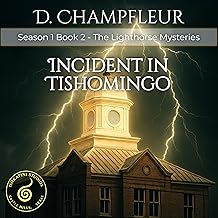
In the quiet early light of Tishomingo, where the old Chickasaw Capitol sits on its rise of limestone and memory, a man collapses and dies on sacred ground. At first glance, it looks like a tourist tragedy—a heart giving out at dawn, nothing more. But as soon as Captain Hawk of the Chickasaw Lighthorse Police arrives at the scene, something feels wrong. The man has no trauma, no witnesses, and nothing on him but a wallet full of credentials that look perfectly real—until they don’t.
The more Hawk studies the scene, the more the questions multiply. Who was this man? Why did he come to the Capitol at sunrise? And why was he found with a Texas license belonging to someone very much alive? In a post–McGirt Oklahoma, where jurisdiction depends on tribal citizenship, geography, and the unforgiving letter of the law, a body without a name becomes a legal orphan—and an investigative nightmare.
Officer Overton, now growing steadily into her role as Hawk’s trusted partner, joins him from the first moments of the investigation. Together they begin tracing the faint lines of the dead man’s last movements. The clues take them from the Capitol grounds to a rented sedan, to a thin trail of receipts leading not into Chickasaw country, but east—to the sprawling Choctaw Casino in Durant.
That is where Captain Frasier of the Choctaw Lighthorse enters the story. A polished, unflappable investigator with deep connections inside his Nation’s institutions, Frasier represents both cooperation and tension. His presence signals that the case does not belong solely to the Chickasaws—or to anyone, yet. The victim spent his final night under Choctaw jurisdiction, but he died on Chickasaw ground. Between those two points lies a gulf of unanswered questions.
To help untangle the growing web, the Oklahoma State Bureau of Investigation sends their senior detective, Jack Holloway, along with Betty Penny—sharp, detail-driven, and increasingly essential. Together, the four investigators form an uneasy alliance shaped by overlapping sovereignties, competing responsibilities, and the constant need to respect boundaries while trying to find the truth.
The trail soon leads from Tishomingo to Durant, where the casino’s surveillance rooms hold grainy but damning glimpses of the victim. He checked into a suite under a false name, deposited cash with meticulous regularity, and entertained “visitors” who never touched a gaming table. Young women who moved quietly, spoke little English, and were delivered by men driving Texas-tagged trucks. Each visit lasted only hours. Each departure was discreet.
What began as a simple death now points toward something larger—a trafficking network operating beneath the bright lights of the casino. A network that treats women from overseas as “paper brides,” funneled through shadowy channels, traded between jurisdictions, and hidden behind shell companies and fake identities. As the investigators dig deeper, they discover connections stretching from Seoul to Dallas to the red dirt highways of Oklahoma.
But every new lead only tightens the knot. The victim’s elegant suit is traced to a tailor in South Korea—custom-made, paid for in cash, delivered to a freight forwarder near Tinker Air Force Base. The men he associated with in Durant have no clean paper trail. And the most polished among them—a Dallas businessman with political charm and money to burn—knows far too much about the dead man and far too little about compassion.
As Hawk, Overton, Holloway, Penny, and Frasier work their threads, they realize that this is not merely a case about a single death. It is a collision between Nations, laws, and the darker corners of commerce—where identity can be bought, women can be traded, and a body can end up in the wrong place at the wrong time simply because the people orchestrating the scheme assumed no one would look too closely.
They were wrong.
Incident in Tishomingo continues the Lighthorse Mysteries with a story rooted in modern tribal law enforcement, rich in character, and driven by the unspoken question running beneath every page: Who speaks for the dead when no one claims them?
In southern Oklahoma, that answer is never simple—and never the same twice.