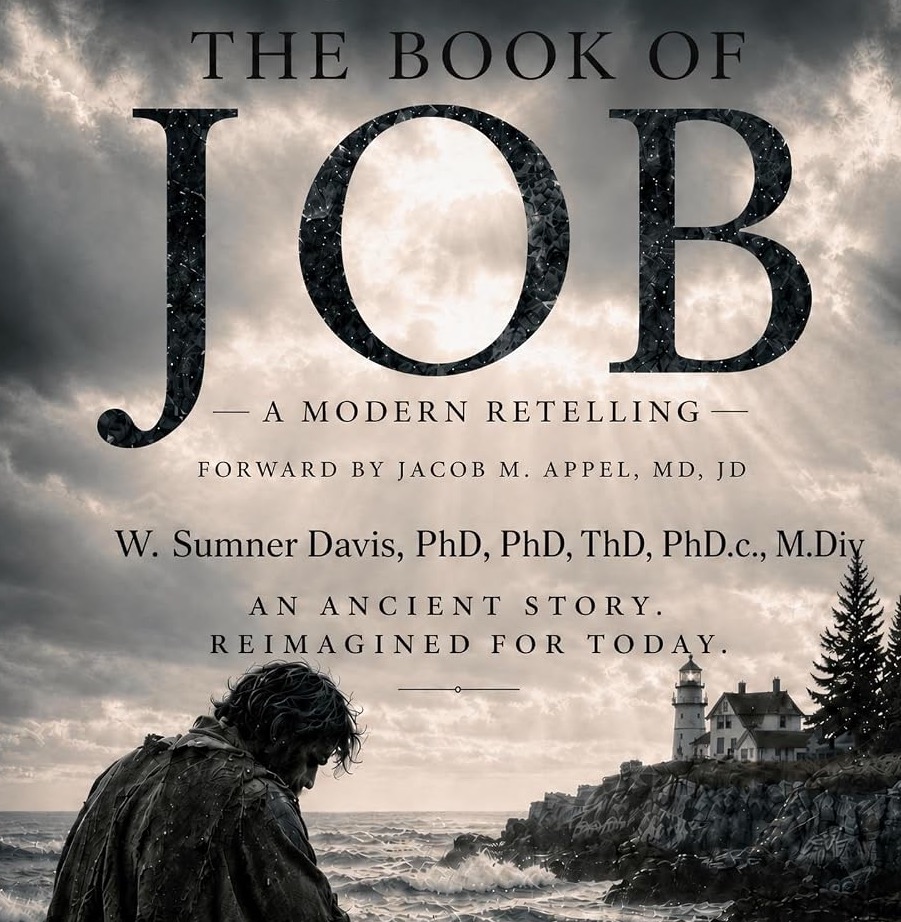
The Book of Job – A Modern Retelling by W. Sumner Davis is a literary and psychological reimagining of the ancient Biblical story, relocated to the harsh and weathered coast of Maine. Rather than kings, deserts, and ancient cities, this version unfolds among fishermen, storms, grief, and the quiet endurance of ordinary people facing unbearable loss.At its center is Job Thorne, an aging fisherman whose life is shattered by tragedy, illness, financial ruin, and the slow unraveling of everything he once believed gave life meaning. Yet beneath the surface of the story lies something deeper than suffering alone. The novel explores trauma, identity, faith, masculinity, memory, and the struggle to remain human when life becomes indifferent and cruel.Drawing heavily from psychological themes—particularly Jungian ideas of shadow, transformation, and meaning—the book becomes less a simple retelling and more an exploration of the human condition itself. The sea, weather, and isolated coastal setting function almost as living characters, mirroring Job’s inner collapse and gradual confrontation with himself.