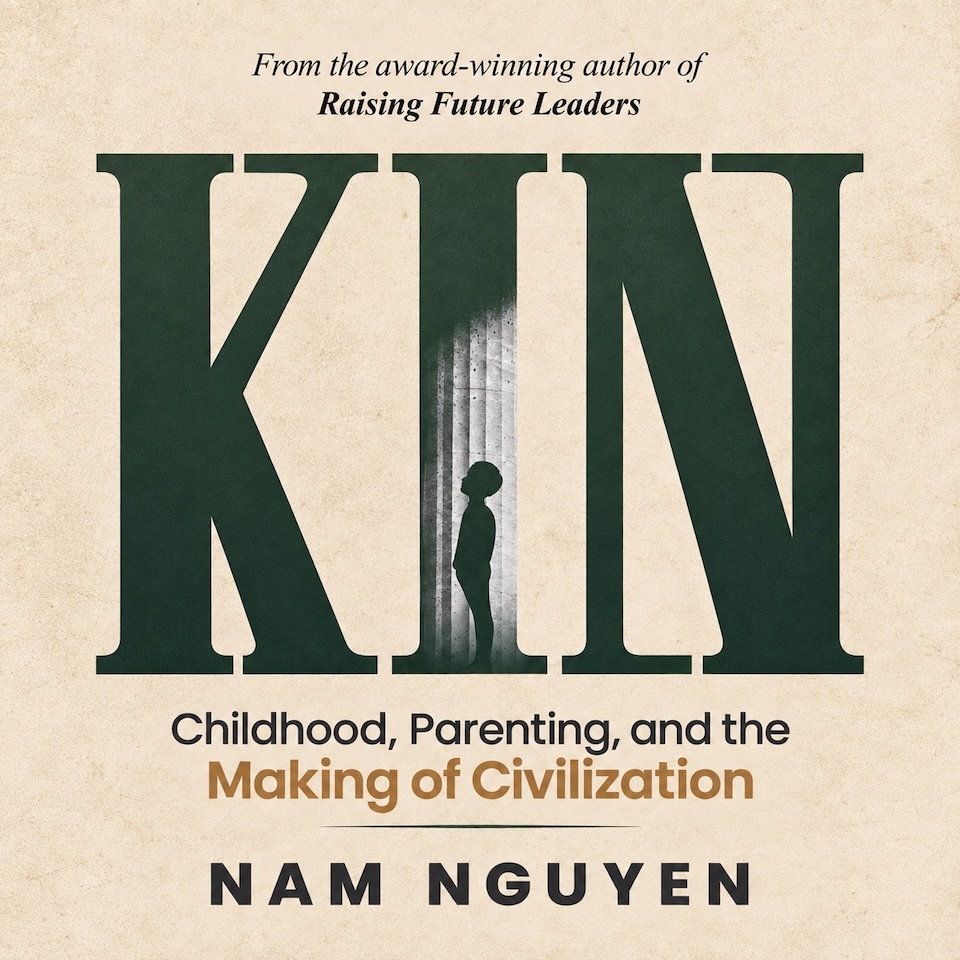
What if one of the most powerful forces in human history has been hiding in plain sight?
We tell history through wars, rulers, inventions, and institutions. KIN tells it through childhood—through the ways each generation has raised the next, and the kinds of people societies have needed children to become.
From the first human communities, where survival depended on many hands caring for helpless infants, to agricultural households, empires, factories, classrooms, consumer culture, smartphones, and artificial intelligence, KIN follows childhood across the long arc of civilization.
Along the way, discover:
How the helplessness of human infants helped make cooperation, empathy, and culture possible
How agriculture transformed children into workers, heirs, and carriers of family wealth
How religions, empires, schools, and nations shaped childhood around belief, obedience, and citizenship
How markets turned children into consumers—and screens turned childhood into something increasingly public, measurable, and commercial
How AI, declining fertility, climate uncertainty, and emerging technologies may reshape childhood again
KIN is not a parenting manual. It is a big-idea work of nonfiction about the hidden relationship between childhood and civilization, drawing on research across history, anthropology, psychology, neuroscience, and the social sciences.
It asks us to look beyond the question of how to raise successful children and consider something larger: what happens when millions of families, institutions, technologies, and cultures all shape the next generation at once?
What kind of people are we raising—and what kind of world is raising them?
For readers interested in history, psychology, family, education, technology, and the future of society, KIN offers a new way to understand where we came from—and what we may be becoming.